Finish matched to contaminant
Sandy nitrile for oil, crinkle for wet smooth parts, foam for dry abrasive handling. The chemistry is similar; the surface texture is what changes grip.
Wet & oily grip · sandy finish
When the part is wet, oily or smooth, grip is the whole job: sandy nitrile and crinkle finishes that hold on where smooth palms slip.
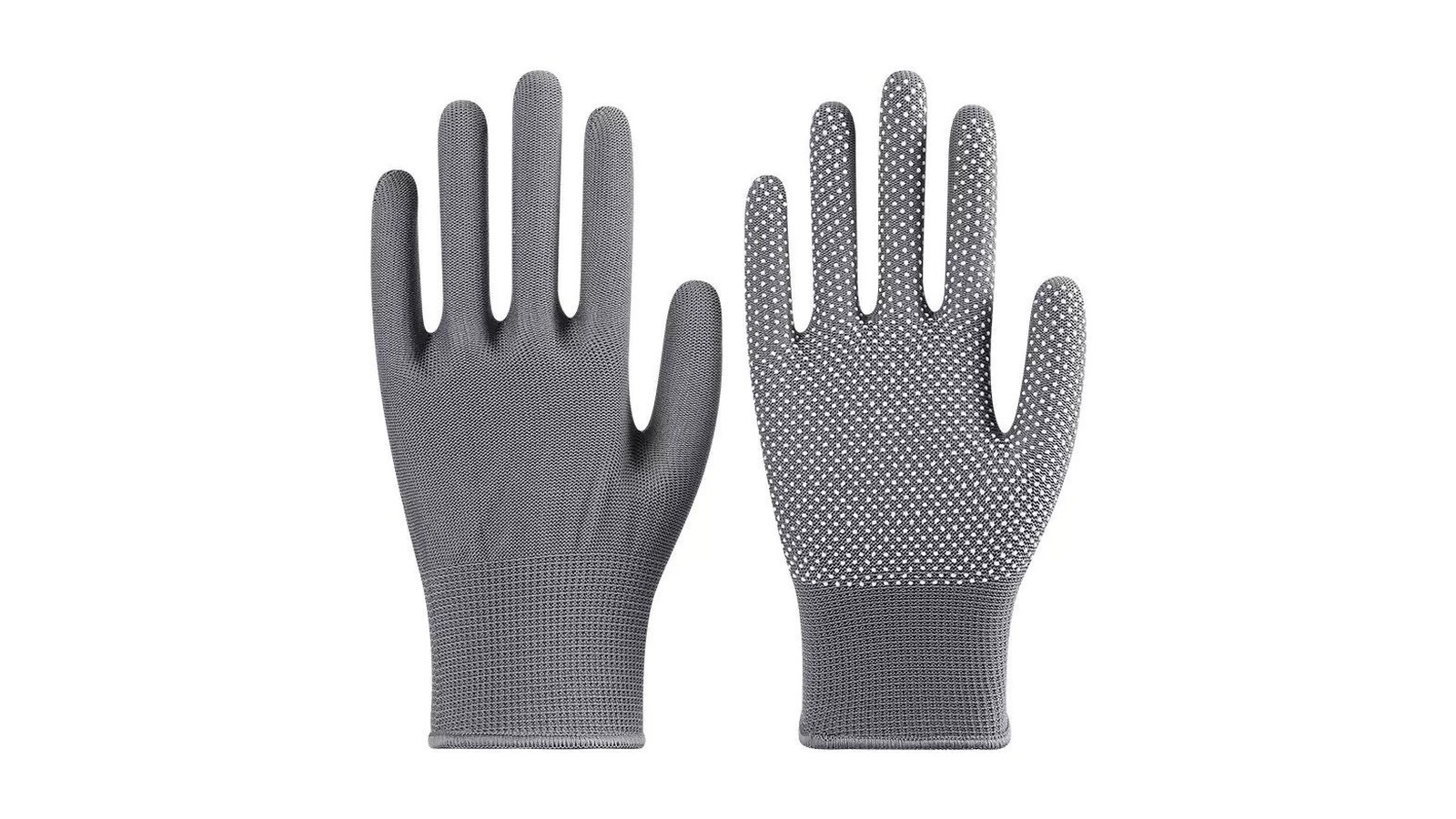
Grip work gloves cannot be specified by a single property. A glove that grips a dry box can be useless on an oily pipe, and a glove that holds wet glass may wear out on dry steel. The finish — sandy, crinkle, foam or dotted — decides which surface the glove actually holds.
We match the finish to the contaminant and the part shape: sandy nitrile for oil and water, crinkle nitrile for wet smooth surfaces, PVC dots for dry cartons. If a buyer describes the part and the contaminant, we can usually name the right finish in one reply.
The same glove can hold a dry steel bar perfectly and still be useless on a wet plastic drum, and a soft palm that grips glass offers nothing on an oily shaft. Describe the object, its surface and its condition — dry, wet, oily, dusty or icy — and we match the finish: smooth nitrile for dry precision work, sandy nitrile for wet and oily, PVC dots or crinkle latex for dry abrasive surfaces, and a rough PVC film for mud.
Reviewed · Specs confirmed on the approved sample
Sandy nitrile for oil, crinkle for wet smooth parts, foam for dry abrasive handling. The chemistry is similar; the surface texture is what changes grip.
Textured coatings push liquid away from the contact patch instead of letting it form a film. That is why sandy finishes outperform smooth palms when hands are wet.
Grip builds keep a knit back for breathability and a rated liner where cut protection is needed, so grip does not come at the cost of the rest of the glove.
Reference
Ratings depend on liner, gauge and coating. Final values are confirmed on the approved sample.
Match the finish to the contaminant first, then the part shape. A finish that grips oil can polish on dry steel.
| Contaminant | Best finish | Avoid | Note |
|---|---|---|---|
| Oil / grease | Sandy nitrile | PU, smooth PVC | Nitrile resists oil; PU softens |
| Water / wet parts | Crinkle or sandy nitrile | Flat palm | Texture channels water away |
| Dry abrasive | Foam or flat nitrile | Smooth PU | Abrasion life beats texture here |
| Dry cartons | PU or PVC dots | Sandy nitrile | Point-dot nylon is lightweight and high-stretch |
| Wet handling | Foam latex | PU | Grey yarn, green dip, one size, 12 pairs per bag |
| Glass (dry) | PU or foam nitrile | Rough PVC | Feel matters more than texture |
Questions buyers ask
If your question is about a specific style, send the spec and we will answer with the sample plan instead of a generic reply.
Sandy nitrile over a knit liner. Nitrile resists oil and the rough finish channels it away from the contact patch. PU palms soften and lose grip in oil.
Textured nitrile works well on wet parts. Smooth palms and leather do not. For full immersion, choose a fully coated glove so water does not enter through the back.
No. Texture helps on wet and oily surfaces but can add drag on dry cartons and reduce feel on small parts. Match the finish to the surface.
Yes. Sandy nitrile is commonly applied over A2–A4 HPPE liners for handling sharp, oily parts such as sheet metal and glass.
Next step
Share the glove type, liner and coating, quantities and destination. We reply with the sample plan, unit price at your quantity and the packaging options for your market.