Seen at distance
Fluorescent knit backs plus reflective knuckle trim make hand signals readable in low light and headlights, where dark gloves vanish.
Fluorescent knit · reflective trim
Fluorescent backs and reflective trim so hand signals read at distance — in lime or orange, with cut and impact options.
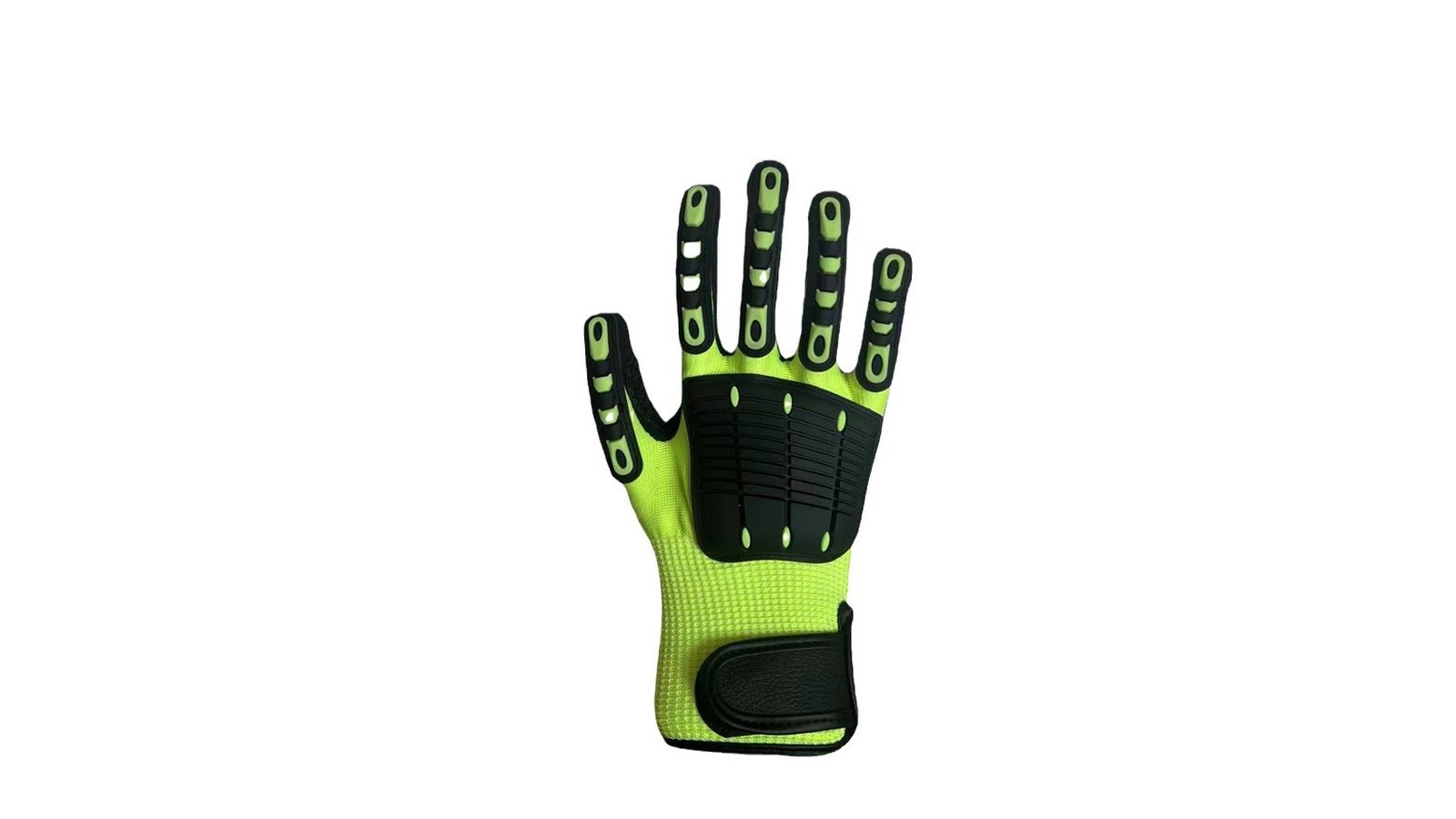
Hi-vis work gloves exist because hand signals only work if they can be seen. In low light, rain or a busy yard, dark gloves disappear against machinery and clothing. Hi-vis gloves use fluorescent knit and reflective trim to keep hands legible to plant operators and drivers.
The color is not cosmetic: fluorescent lime and orange are the background colors used in high-visibility clothing standards, and reflective trim adds return in headlights. We build them on the same liners as our standard gloves, so visibility does not cost cut protection.
Hi-vis on a glove is a safety-system decision, not a colour choice. The value comes from being seen at distance in poor light, so the fluorescent colour needs to cover the back of the hand rather than a stripe, and reflective trim only helps when it faces a light source — which is why the usual layout puts a band across the knuckles and another along the cuff. In practice the glove also has to survive the work it is worn for, so we build hi-vis backs on the same abrasion-rated palms as the plain version rather than on a light-duty base.
Reviewed · Specs confirmed on the approved sample
Fluorescent knit backs plus reflective knuckle trim make hand signals readable in low light and headlights, where dark gloves vanish.
The hi-vis build uses the same HPPE or polyester liners as the standard range, so A2–A5 cut levels and TPR impact shells remain available.
Lime for general sites and daylight, orange for rail and where lime blends into vegetation. Both are available with reflective trim.
Reference
Ratings depend on liner, gauge and coating. Final values are confirmed on the approved sample.
Visibility does not replace the base glove. Choose the liner and cut level for the task first, then the colour.
| Build | Cut | Impact | Typical use |
|---|---|---|---|
| Lime knit, PU palm | A1–A2 | None | Warehouse, yard, events |
| Lime HPPE, nitrile palm | A4 | None | Road works, utilities |
| Orange HPPE, TPR | A4–A5 | Level 2 | Rail, plant, heavy site |
| Lime full-dip PVC | A1 | None | Wet outdoor work |
Questions buyers ask
If your question is about a specific style, send the spec and we will answer with the sample plan instead of a generic reply.
Work gloves are not certified as high-visibility garments. The colors follow the background colors used in high-visibility clothing standards, and reflective trim adds return. Treat them as a visibility aid alongside your hi-vis clothing.
Lime performs better in most daylight and urban backgrounds; orange is used on rail and where lime blends into foliage. Many buyers stock both and issue by site.
Fluorescent dyes fade with UV and industrial washing. Replace gloves when the color dulls, because faded fluorescence no longer performs its purpose.
Yes. Reflective or fluorescent TPR shells are available on level 2 builds, combining visibility with struck-hand protection. Colour fastness matters as much as brightness: a lime back that fades in the wash stops being visible long before it wears out.
Next step
Share the glove type, liner and coating, quantities and destination. We reply with the sample plan, unit price at your quantity and the packaging options for your market.