Temperature and time
We ask for both before recommending a build. A glove rated for short contact is not a furnace glove, and treating it as one is how burns happen.
Contact heat · EN407 ratings
Aramid and leather builds for hot parts, trays and light furnace work — rated by contact temperature and time, not by a slogan.
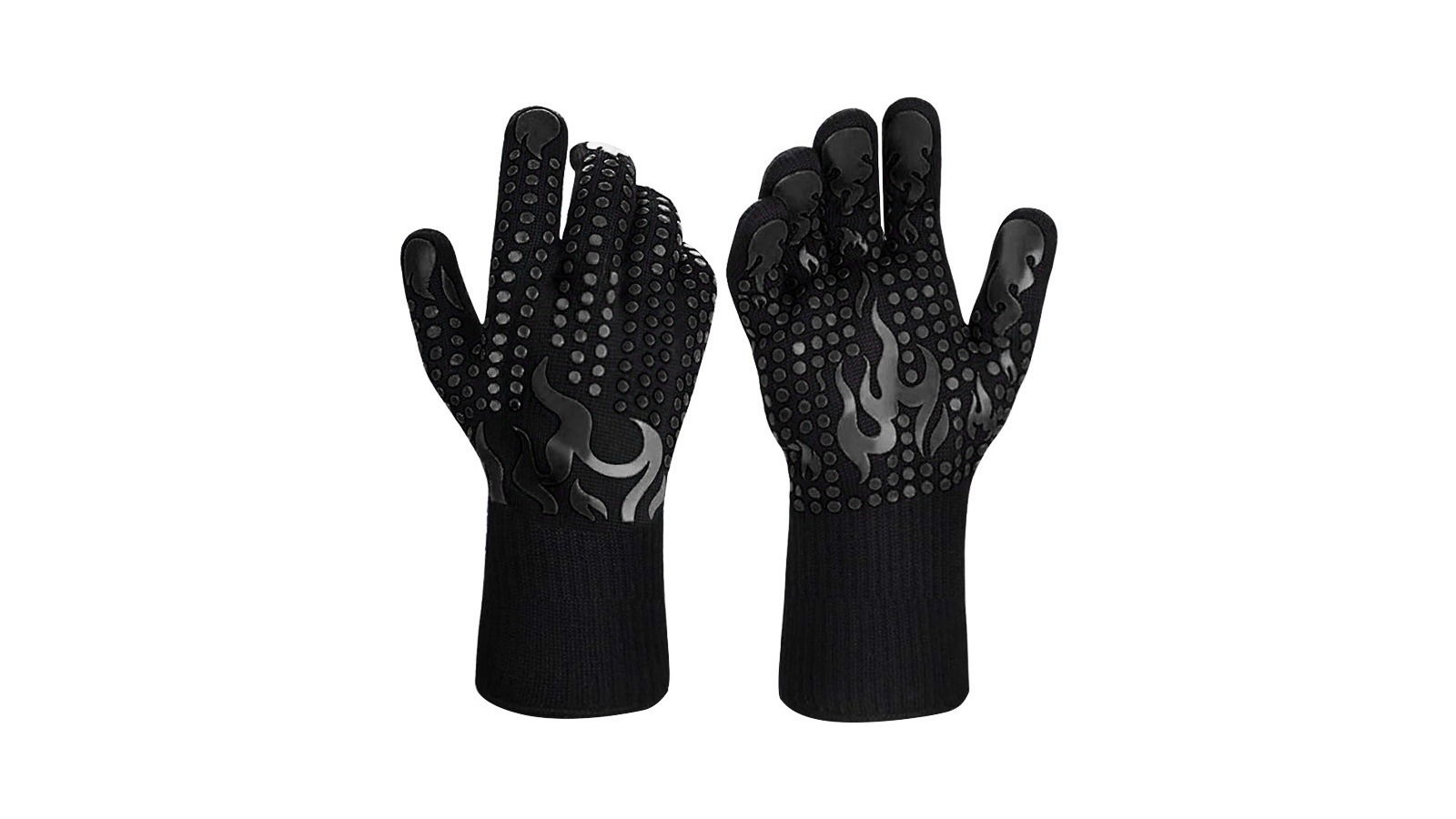
Heat-resistant work gloves depend on temperature and time together. A glove that handles a 200 °C tray for ten seconds is not the same glove that handles a 300 °C casting for a minute. EN407 contact-heat levels exist precisely because both numbers matter.
We build heat gloves around aramid fiber, leather and aluminized options: thin aramid knits for bakery and light handling, leather-palm aramid for foundry and glass, and heavier builds for short contact with hotter parts. Tell us the surface temperature and dwell time, and we match the build.
Contact heat and radiant heat are different problems. A glove rated for handling a 250 °C part for fifteen seconds is not the same as one that stands next to a furnace door for a shift. Give us the surface temperature, how long the hand is in contact, and whether there is flame or molten spatter, and the material choice follows: aramid knits for radiant heat, leather or aluminised backs for contact, and a different approach entirely if molten metal is involved.
Reviewed · Specs confirmed on the approved sample
We ask for both before recommending a build. A glove rated for short contact is not a furnace glove, and treating it as one is how burns happen.
Aramid liners resist heat without melting, and leather palms add abrasion and radiant protection at the contact surface.
Thin aramid knits work for bakery trays and light parts where feel matters; heavier leather builds suit hot castings where grip strength matters more.
Reference
Ratings depend on liner, gauge and coating. Final values are confirmed on the approved sample.
Heat ratings depend on contact time. Confirm both values with the sample before use on hot work.
| Build | Contact heat | Dexterity | Typical use |
|---|---|---|---|
| Aramid knit, nitrile dots | Up to 250 °C, short | High | Bakery, light trays, lab |
| Aramid + leather palm | Up to 300 °C, short | Medium | Foundry, glass, metal parts |
| Heavy split cowhide gauntlet | Up to 350 °C, short | Low | Furnace doors, hot castings |
| Aluminized back, leather palm | Radiant heat | Low | Furnace and kiln work |
Questions buyers ask
If your question is about a specific style, send the spec and we will answer with the sample plan instead of a generic reply.
No. Heat-resistant work gloves handle contact heat and radiant heat for short periods. Open flame, molten metal and structural firefighting need dedicated protective equipment.
It records the highest contact temperature the glove can withstand for 15 seconds without the inner surface rising more than a set amount. Higher levels mean hotter contact, not unlimited time.
Aramid adds some cut resistance, but it is not a substitute for an HPPE cut glove. Where both heat and sharp edges exist, specify both requirements.
Minor seam damage can sometimes be re-stitched, but heat exposure degrades fibers invisibly. Replace gloves that have been exposed beyond their rated contact time.
No. A heat-resistant glove resists contact and radiant heat on the outside; an insulated glove traps warmth for cold work. For hot handling, specify the contact temperature and dwell time; for cold, the lowest temperature and shift length. A glove built for one job is not a substitute for the other.
Next step
Share the glove type, liner and coating, quantities and destination. We reply with the sample plan, unit price at your quantity and the packaging options for your market.