Warmth where it is lost
Fleece or acrylic terry lining on the back of the hand, with a thinner palm so fingers can still close around a handle.
Insulated · EN511 cold ratings
Warmth without losing grip: fleece or acrylic linings, nitrile palms that stay soft in the cold, and a waterproof shell when the work is wet.
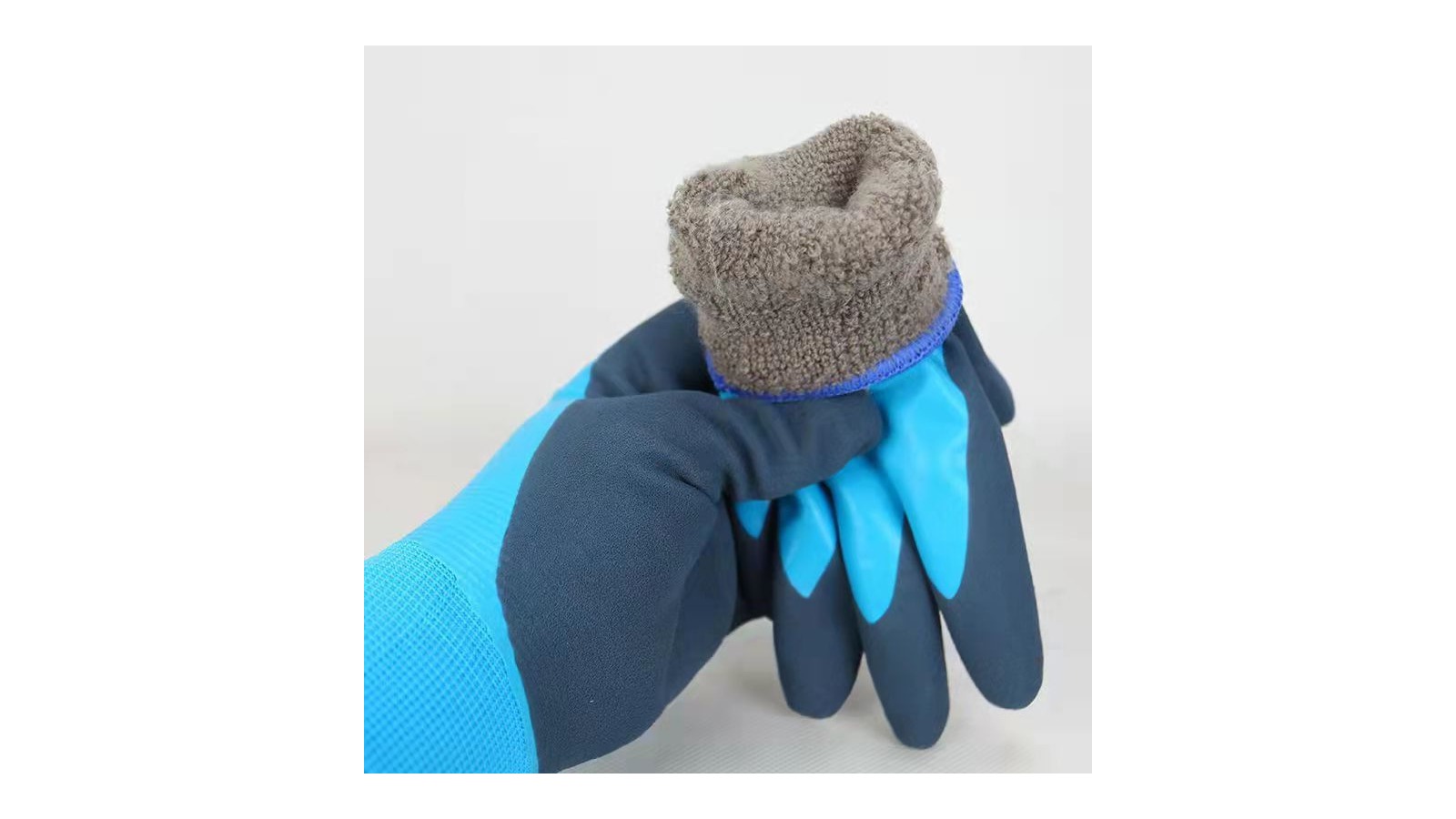
Winter work gloves have to solve a simple problem: cold hands lose grip strength before they lose feeling, which is why they fail in two ways — not warm enough, or too bulky to hold a tool. The fix is a lining that traps warm air close to the skin and a palm that stays flexible below freezing.
We build three cold-weather families: a knit winter glove with a fleece lining and nitrile palm for dry cold, a fully coated waterproof version for wet cold, and a heavy insulated gauntlet for outdoor work at lower temperatures. EN511 cold ratings are stated on the approved spec.
Get the temperature and the duration right before choosing a build. A fleece-lined knit glove is comfortable at −5 °C on a two-hour outdoor task and useless at −25 °C in a cold store where hands are wet. Tell us the lowest temperature, whether the hand stays wet or dry, and how long a shift runs, and we will point to the build rather than the warmest glove in the range, which is often too bulky to be worn for a full shift.
Reviewed · Specs confirmed on the approved sample
Fleece or acrylic terry lining on the back of the hand, with a thinner palm so fingers can still close around a handle.
Nitrile and PU palms remain flexible in cold conditions; PVC stiffens. For sub-zero handling, the palm choice matters as much as the lining.
A knit back is fine for dry cold. For snow, rain or washdown, specify a full shell so the insulation does not soak and lose its warmth.
Reference
Ratings depend on liner, gauge and coating. Final values are confirmed on the approved sample.
Wetness decides the build before temperature does. A fully coated shell is the difference between a dry-cold glove and one that soaks through.
| Build | Conditions | Warmth | Dexterity |
|---|---|---|---|
| Fleece-lined knit, nitrile palm | Dry cold | Medium | High |
| Acrylic terry, full nitrile | Wet cold | High | Medium |
| 3-layer insulated, gauntlet | Severe cold, outdoor | Highest | Low |
| Thin liner glove + shell | Variable | Medium | Highest |
Questions buyers ask
If your question is about a specific style, send the spec and we will answer with the sample plan instead of a generic reply.
EN511 rates cold protection on three scales: convective cold, contact cold and water penetration. A rated glove carries three digits, and the contact-cold digit is the one that matters for handling cold metal.
Yes, but choose the build for the temperature and duration. For long shifts below −20 °C, a 3-layer insulated gauntlet is more reliable than a fleece-lined knit.
Thicker linings reduce feel. A thin nitrile palm on an insulated back keeps grip usable; a full PVC shell is warmer but much less dexterous.
Yes, conductive fingertips can be added. On insulated gloves the fingertip pad stays thin, so touch still works without exposing the finger.
Next step
Share the glove type, liner and coating, quantities and destination. We reply with the sample plan, unit price at your quantity and the packaging options for your market.